

CRISPR technology is changing genetic engineering fast. It lets us edit genes with great precision. This opens doors for treating genetic diseases and making crops better.
When we look at gene editing, we must think about the ethical implications. The benefits for medicine and farming are huge. But, we also worry about the risks of changing the human genome.
This article will look at the latest in CRISPR technology. We’ll talk about its good sides and bad sides. And we’ll share what scientists are arguing about.
What is CRISPR and How Does It Work?
CRISPR is a big deal in science, but what does it do? It’s a tool that edits genes, changing how we do biology research. It works by finding a specific spot in DNA and cutting it.
Overview of CRISPR Technology
CRISPR is a game-changer in genetic engineering. It’s based on a bacteria defense system, now used for editing genes. It has two parts: Cas9, the cutter, and guide RNA, the guide.
Want to learn more about genome editing? Check out MedlinePlus for the basics and new developments.
Mechanisms of Gene Editing
CRISPR-Cas9 editing has a few steps. First, guide RNA finds the DNA spot to target. Then, Cas9 cuts the DNA. This break lets the cell fix it, and researchers can make changes.
- The guide RNA finds a DNA sequence.
- Cas9 cuts the DNA at that spot.
- The cell fixes the cut, allowing for editing.
Applications in Research and Medicine
CRISPR has changed genetic research and medicine. It’s used to treat genetic diseases by fixing mutations. In research, it lets scientists study genes with great detail.
| Application | Description | Potential Impact |
|---|---|---|
| Genetic Disease Treatment | Correcting genetic mutations | Cure for inherited diseases |
| Cancer Research | Studying cancer genomics | New cancer therapies |
| Gene Therapy | Replacing faulty genes | Treatment for genetic disorders |
The ethical implications of gene editing are big. As CRISPR gets better, we must think about its effects in medicine and research.
Historical Context of Gene Editing
Exploring the history of gene editing shows how far we’ve come. The CRISPR-Cas9 breakthrough was years in the making. It’s a major step forward in genetic engineering.
Milestones in Genetic Research
Genetic research has made huge strides over the years. The discovery of DNA’s structure by James Watson and Francis Crick in 1953 was a big deal. It gave us a basic understanding of genetics.
Later, the 1970s saw the rise of recombinant DNA technology. This allowed scientists to play with genetic material. It opened up new research paths and applications.
From Early Techniques to CRISPR
Old gene-editing methods were slow and not very precise. Then, CRISPR-Cas9 came along. It changed the game with its accuracy and speed.
CRISPR-Cas9 has let researchers tackle new challenges. They’re working on genetic diseases and creating new treatments.
Key Figures in Gene Editing History
Many scientists have been key to gene editing’s progress. Jennifer Doudna and Emmanuelle Charpentier are famous for their work on CRISPR-Cas9. They showed how it can edit genes with precision.
| Year | Milestone | Key Figures |
|---|---|---|
| 1953 | Discovery of DNA Structure | James Watson, Francis Crick |
| 1970s | Development of Recombinant DNA Technology | Herbert Boyer, Stanley Cohen |
| 2012 | Introduction of CRISPR-Cas9 | Jennifer Doudna, Emmanuelle Charpentier |
Breakthroughs in Medical Applications
CRISPR-Cas9 has changed medical research, focusing on genetic diseases. It’s making a big difference in how we treat genetic disorders. This technology is a game-changer.
Treating Genetic Disorders
CRISPR-Cas9 has helped treat diseases like sickle cell and beta-thalassemia. It edits genes to fix these conditions. This gene therapy progress is a big step forward.
Clinical trials show CRISPR-Cas9 can improve sickle cell disease. Patients are seeing better results. This shows gene editing’s potential in medicine.
Advancements in Cancer Research
Cancer research has also seen big gains from CRISPR-Cas9. It lets researchers edit cancer genes for better treatments. This has sparked a gene editing controversy over ethics.
CRISPR-Cas9 can target and kill cancer cells. This is a major breakthrough in cancer therapy. It’s a step towards better cancer treatments.
Gene Editing in HIV and Other Viral Infections
Gene editing is also being explored for viral infections like HIV. CRISPR-Cas9 can remove viral DNA from cells. This could lead to new treatments for viral diseases.
| Disease | Gene Editing Approach | Status |
|---|---|---|
| Sickle Cell Disease | CRISPR-Cas9 correction of genetic mutation | Clinical Trials |
| Beta-Thalassemia | CRISPR-Cas9 correction of genetic mutation | Clinical Trials |
| Cancer | Disruption of cancer-specific genes | Research and Development |
| HIV | Removal of viral DNA | Research |
As research goes on, we’ll see more gene therapy progress. This could lead to new treatments for many diseases. But, we must also talk about the gene editing controversy and its ethics.
Ethical Debates Surrounding CRISPR
CRISPR-Cas9 technology has sparked big debates worldwide. It makes us think about its impact on humanity. We need to understand the different sides of these debates.
Concerns Over Designer Babies
One big worry is about “designer babies.” This means using CRISPR to change genes for traits like looks or smarts. It lets parents pick their child’s features.
- Genetic enhancements raise questions about how far parents should go. It also worries about societal pressure.
- There’s a fear of unequal access. This could make social gaps bigger.
Implications for Genetic Inequality
CRISPR could change how we see genetic equality. If it’s used for certain traits, only the rich might get it. This could make social gaps wider.
- Genetic inequality could lead to a new kind of social divide. Those who are “fixed” might have an edge.
- This could start a new kind of discrimination based on genes.
Potential Risks of Gene Editing
CRISPR gene editing comes with risks. Off-target effects, where wrong parts of the genome are changed, are a big worry.
- There’s a chance of health problems from gene editing.
- Mosaicism, where not all cells are edited, could lead to mixed results.
Here’s a list of key ethical issues:
- Off-target effects and their risks
- Unequal access to gene editing
- Genetic inequality concerns
- Creating “designer babies” ethics
- Need for strong rules
In conclusion, CRISPR-Cas9 debates are complex. We must think deeply about these issues. As we go forward, we need to talk about gene editing’s effects.
Regulatory Framework for Gene Editing
Gene editing technologies like CRISPR are getting better fast. This makes a strong regulatory framework very important. It’s a complex issue with many players, like scientists, policymakers, and the public.
How gene editing is regulated changes a lot from country to country. This is because of different views on ethics, laws, and society. We’ll look at the current rules for gene editing, focusing on the U.S., international guidelines, and the role of science groups.
Current U.S. Regulations
In the U.S., several agencies watch over gene editing. The FDA, NIH, and USDA are among them. The FDA checks on gene-edited foods and medicines. The NIH sets rules for research.
- The FDA makes sure gene-edited foods and medicines are safe for us.
- The NIH helps scientists do gene editing research the right way.
- The USDA looks after gene-edited plants and animals. They make sure they’re safe for the environment and us.
International Guidelines and Differences
Abroad, rules for gene editing are different. Some places are more open, while others are stricter.
Key differences in international regulations include:
- Some countries let gene editing for making babies, while others ban it.
- How much oversight and which agencies do it varies a lot.
- There’s no clear way to classify and regulate gene-edited products.
Role of Scientific Organizations
Science groups are key in shaping gene editing rules. They offer advice, set standards, and talk to the public. This helps make sure gene editing is done right.
Examples of scientific organizations involved in gene editing regulation include:
- The National Academy of Sciences has groups to look into gene editing’s ethics and science.
- The American Society of Gene & Cell Therapy gives advice on using gene editing tech.
Public Perception of Gene Editing
Gene editing technologies like CRISPR are getting better. It’s important to know how people see these advancements. You might be curious about what the general public thinks.
Many things affect how people view gene editing. Media coverage and education are key. Let’s explore these factors.
Surveys and Studies on Public Opinion
Many surveys and studies have looked into what people think about gene editing. For example, they might ask if CRISPR should be used for health or farming. These studies help us understand public views better.
Public opinion is diverse. It changes based on culture, education, and personal beliefs. By looking at these studies, we can see how complex public perception is.
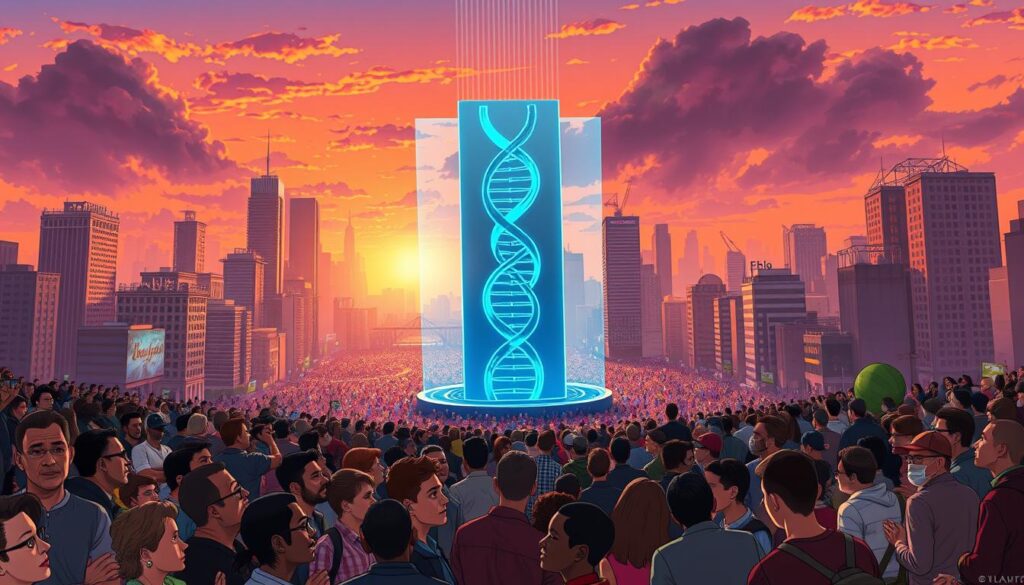
Influence of Media Coverage
The media greatly shapes public perception of gene editing. News and documentaries can either educate or scare people. It depends on how they report the facts.
Headlines like “CRISPR Cures Genetic Disease” or “Gene Editing Raises Ethical Concerns” can sway public opinion. The way these stories are told matters a lot.
Educational Efforts to Inform the Public
Education is key to teaching people about gene editing. By sharing accurate, easy-to-understand info, we can clear up misunderstandings. You can help by staying up-to-date and talking about gene editing.
Some groups are creating educational programs and materials about gene editing. Their goal is to give people the knowledge they need. This way, we can have better discussions about its uses and effects.
The Role of Scientists and Bioethicists
Scientists and bioethicists lead the way in dealing with the ethics of gene editing. They work together to shape the future of this field.
Collaborations in Ethical Research
Scientists and bioethicists team up for ethical research. This teamwork is key to making sure gene editing is done right. Joint research initiatives help grasp the ethics of gene editing.
This partnership includes:
- Conducting ethical impact assessments
- Creating guidelines for safe gene editing
- Talking openly about gene editing’s effects
Importance of Diverse Perspectives
Diverse views are crucial in ethical research. They offer different insights, leading to a deeper understanding of ethics. Bringing in voices from various fields makes the ethical framework stronger.
| Discipline | Contribution to Ethical Research |
|---|---|
| Biology | Understanding the biological implications of gene editing |
| Philosophy | Analyzing the ethical and moral dimensions |
| Law | Developing legal frameworks for gene editing |
Engaging in Public Discourse
Scientists and bioethicists must talk to the public about gene editing. They need to share its benefits and risks clearly. Public engagement builds trust and ensures the tech fits with society’s values.
Case Studies of CRISPR Applications
CRISPR is changing fast, and looking at its use in different areas shows its power and the issues it raises. It’s been used to treat genetic diseases and fight viruses.
Successful Gene Editing Examples
CRISPR has shown great promise in gene editing. For example, it has fixed genetic problems that cause inherited diseases. One big success is treating sickle cell anemia by fixing the gene that causes it.
It’s also been used to treat Leber congenital amaurosis, a rare eye disorder. CRISPR fixed the genes causing the blindness, helping some patients see again. These stories show CRISPR’s potential in fighting genetic diseases.
Controversial Uses of Gene Editing
But CRISPR has also faced criticism for its use. Editing human embryos has sparked debate, with worries about its safety.
The case of a Chinese scientist editing twin babies’ genes has caused a big stir worldwide. It’s made people talk a lot about the ethics of editing human genes.
Lessons Learned from Past Applications
Looking at CRISPR’s use, we’ve learned a lot. It’s key to be precise and avoid unwanted changes. Also, we need strong rules to control CRISPR’s use.
Using CRISPR means weighing its benefits against its risks. As it keeps improving, learning from past uses is crucial for its safe and right use.
Future Potential of CRISPR Technology
CRISPR technology is on the verge of a big change. It’s set to transform many industries. Research is moving fast, opening up new uses in fields like agriculture and saving the environment.
Innovations on the Horizon
The future of CRISPR looks bright thanks to new ideas. New gene editing tools are being made to fix some old CRISPR-Cas9 problems.
Some exciting new things include:
- Improved Cas9 variants with better precision
- New CRISPR systems like CRISPR-Cas12a
- Base editing that changes bases without breaking DNA
Expanding CRISPR to Agriculture
CRISPR could change farming by making crops better. Gene editing can add good traits like drought resistance and more nutrients.
| Trait | Description | Potential Benefit |
|---|---|---|
| Drought Resistance | Crops that can handle less water | More food in dry places |
| Pest Resistance | Crops that fight off pests without pesticides | Less harm to the environment and cheaper farming |
| Nutritional Enhancement | Crops with more nutrients | Healthier food for people |
Impacts on Environmental Conservation
CRISPR can help the environment too. It can fight invasive species and help endangered ones.
Some ways it can help include:
- Gene drives to control invasive species
- Genetic changes to help endangered species
- Biotechnology to clean up pollution
Challenges Facing Gene Editing
Gene editing is facing many challenges. It deals with technical, biological, and ethical issues. Tools like CRISPR have changed genetics, but they also bring their own set of problems.
Technical and Biological Hurdles
Gene editing has technical challenges like precision and efficiency. Off-target effects, where the wrong parts of the genome are edited, are a big worry. Research is ongoing to make editing tools more precise.
| Challenge | Description | Potential Solution |
|---|---|---|
| Off-target effects | Unintended edits elsewhere in the genome | Improving guide RNA design |
| Mosaicism | Not all cells are edited | Enhancing delivery mechanisms |
| Efficiency | Variability in editing efficiency | Optimizing CRISPR-Cas systems |
Ethical Dilemmas in Research
Gene editing raises deep ethical questions. There’s debate over using it for enhancements, not just treatments. The idea of “designer babies” makes people question altering embryos. A study on PMC highlights the ethical concerns in using gene editing on human embryos.
Balancing Innovation with Safety
To make the most of gene editing, we must balance new ideas with safety. This means thorough testing of these techniques. As we look to the future, we need to be careful but also open to progress.
Engaging with Ethical Frameworks
CRISPR and other gene editing technologies have brought us to a new era. Engaging with ethical frameworks is now crucial for innovation. It’s important to understand the ethical sides of gene editing.
Overview of Ethical Theories in Genetics
Ethical theories in genetics help us see the moral sides of gene editing. These theories include utilitarianism and deontological ethics. Utilitarianism looks at the greatest good for the most people. Deontological ethics focuses on moral rules and duties.
Knowing these theories helps us think about gene editing’s effects. A utilitarian might say it’s okay if it helps a lot of people. A deontologist might think about the rightness or wrongness of changing human genes.
Frameworks for Responsible Research
Frameworks for responsible gene editing research aim to avoid harm and maximize benefits. They include:
- Transparency in research methods and goals
- Public engagement and dialogue
- Collaboration among diverse stakeholders
- Adherence to ethical guidelines and regulations
| Framework Element | Description | Benefits |
|---|---|---|
| Transparency | Clear disclosure of research methods and intentions | Builds trust, facilitates oversight |
| Public Engagement | Involvement of the public in discussions about gene editing | Enhances democratic values, ensures relevance |
| Collaboration | Working together among researchers, ethicists, and policymakers | Fosters comprehensive understanding, mitigates risks |
Balancing Risks and Benefits
Gene editing’s biggest challenge is balancing risks and benefits. It could treat and prevent genetic diseases. But, it also has risks like off-target effects and mosaicism.
To manage these risks, we need careful risk assessment. We should also develop ways to lessen harm. This includes thorough testing and monitoring of gene editing’s effects.
How You Can Get Involved
As the CRISPR and gene editing talks grow, there are many ways to join in. The first step is to learn more about this tech and its uses.
Staying Informed About CRISPR
Keep up with CRISPR news by reading Nature and Science. Also, check out talks and webinars from the National Institutes of Health (NIH).
Supporting Ethical Gene Editing Initiatives
It’s important to back efforts for ethical gene editing. You can give to groups like the Genetic Research Foundation. Or, push for laws that use CRISPR wisely.
Engaging in Community Dialogues
Talking about gene editing in your community is key. Join local talks, online forums, or start chats with friends. This helps everyone understand the big picture.